


LSU Researchers Strengthening Louisiana Industry with Metals and Ceramics that Endure Heat and Pressure
December 08, 2025
Louisiana’s economy relies on materials that can take the heat. From refineries and chemical plants to energy and aerospace systems, the state’s industries rely on metals and ceramics that can withstand extreme temperatures, pressure, and corrosion.
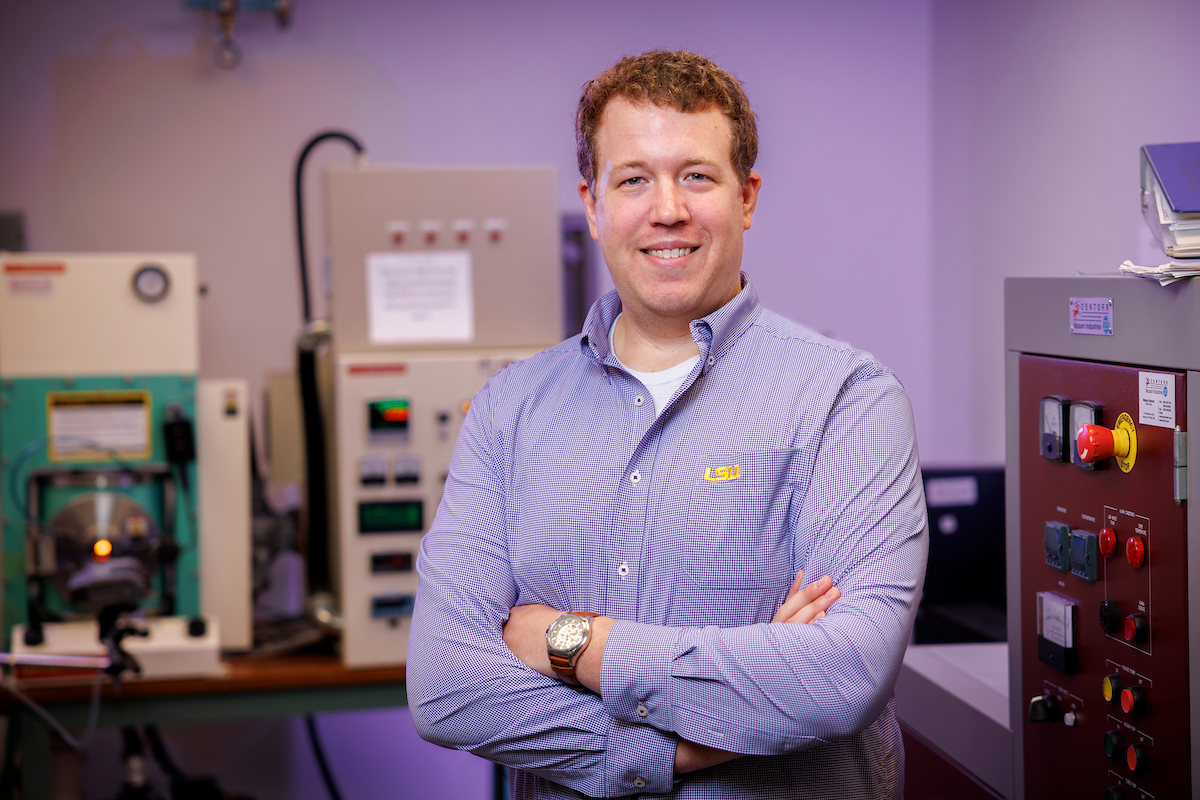
Chris Marvel
However, even the strongest materials wear down over time, resulting in costly maintenance, shutdowns, and increased safety risks.
At LSU’s Extreme Processing & Interfacial Complexions (EPIC) Lab, researchers are uncovering what happens inside metals and ceramics at the atomic level—and how to make metals and ceramics stronger, safer, and more reliable. The EPIC research team uses combinations of extreme temperatures, extreme heating/cooling rates, and/or extreme pressures to fabricate high-performance structural materials for advanced applications.
Chris Marvel, assistant professor in LSU’s Department of Mechanical and Industrial Engineering, oversees the EPIC lab and its team of undergraduates, graduate students, and postdoctoral researchers.
His work recently earned a National Science Foundation CAREER Award, one of the nation’s highest honors for early-career faculty, to study atomic-scale interfacial behavior of ceramics. He has also received support from the Office of Naval Research to study reactive metallic alloys, the Army Research Laboratory to develop nanocrystalline superalloys, and the LA Board of Regents to study mechanochemical reactions.
Supporting Louisiana Industry
For Marvel, the CAREER recognition is about more than prestige. It’s about supporting Louisiana’s workforce and industries through hands-on education and cutting-edge research.
“We work with various entities to help extend our research to real-world applications,” Marvel said.
One such application, called atmospheric plasma spray research, involves developing durable coatings that can be applied to steel components to extend their lifespan in petrochemical applications. The coatings will limit both corrosion and wear, so the lifetime of the materials is greatly extended, Marvel said.
The coatings research is funded through the LSU Center for Innovations in Structural Integrity Assurance (CISIA) and connects the lab team with Louisiana-based companies like Shell, Baker Hughes, Dow, and others that are joining the growing Center.
“Our CISIA research teams based at LSU and Louisiana Tech meet quarterly with our industry partners, and they subsequently help guide our research directions to ensure that we are truly helping solve their real-world challenges.”
The Science Underlying the Research
The atoms within most metals and ceramics position themselves in predictable positions, Marvel said. Clusters of atoms, called grains, can dictate material properties based on their size, shape, and orientation. However, interesting behaviors appear when atoms stray from their intended positions, a phenomenon known as atomic defects.
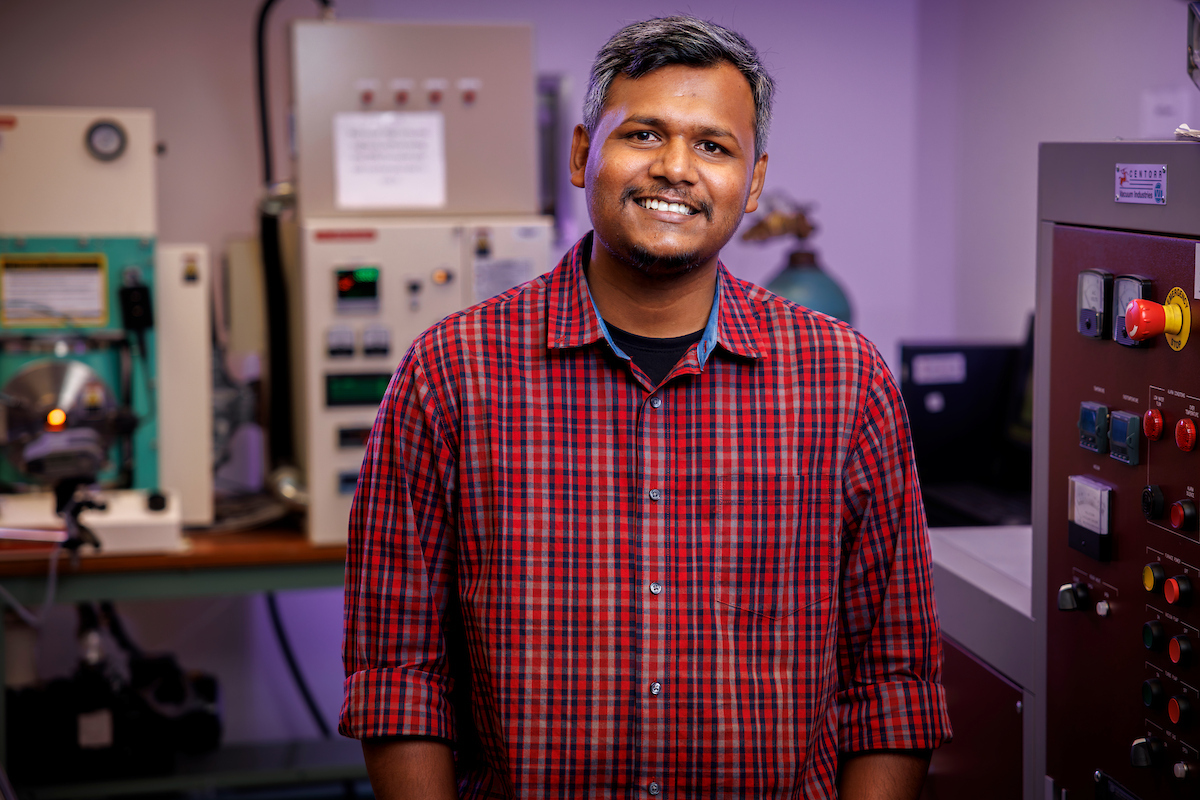
Rashed Mia
“The real magic is what occurs at the interfaces between these grains, or the so-called grain boundaries,” Marvel said. The EPIC group focuses on understanding how to design processing methods to specifically control grain boundary properties and behaviors.
Rashed Mia, a PhD student in mechanical engineering, compares these boundaries to a mortar line where bricks connect in a wall.
“Grain boundaries seem very tiny and inconsequential, but this region plays an important role in determining the material’s stability, conductivity, and strength,” he said. “Basically, the reliability and lifetime of the crystalline materials are heavily influenced by the grain boundaries.”
Mia and other researchers in the lab are studying how materials move and react at the grain boundaries, even engineering these atomic defects, with a goal of optimizing material performance.


Research to Solve Real-World Issues
Methanex Corporation is the world’s largest producer and supplier of methanol globally, with two production locations in the U.S., which include two operating plants in Texas (one is a joint venture operating under the name Natgasoline)—and three operating plants in Geismar, Louisiana, along with five other manufacturing sites across the globe.
Marvel has maintained a relationship with Methanex for years, having previously completed a literature survey for the company, which highlighted existing research and scholarly work on topics relevant to the company.
“At Methanex, we recognize the importance of academic research in advancing innovation across the chemical industry,” said Peter Tait, global expert - static equipment at Methanex.
“Institutions like Louisiana State University play a valuable role in developing the next generation of talent and driving science that supports industrial progress,” he said. “We’ve appreciated the opportunity to connect with LSU through various recruitment initiatives at our Geismar site, and we look forward to exploring future opportunities to collaborate.”
Electron Microscope ‘Super Users’
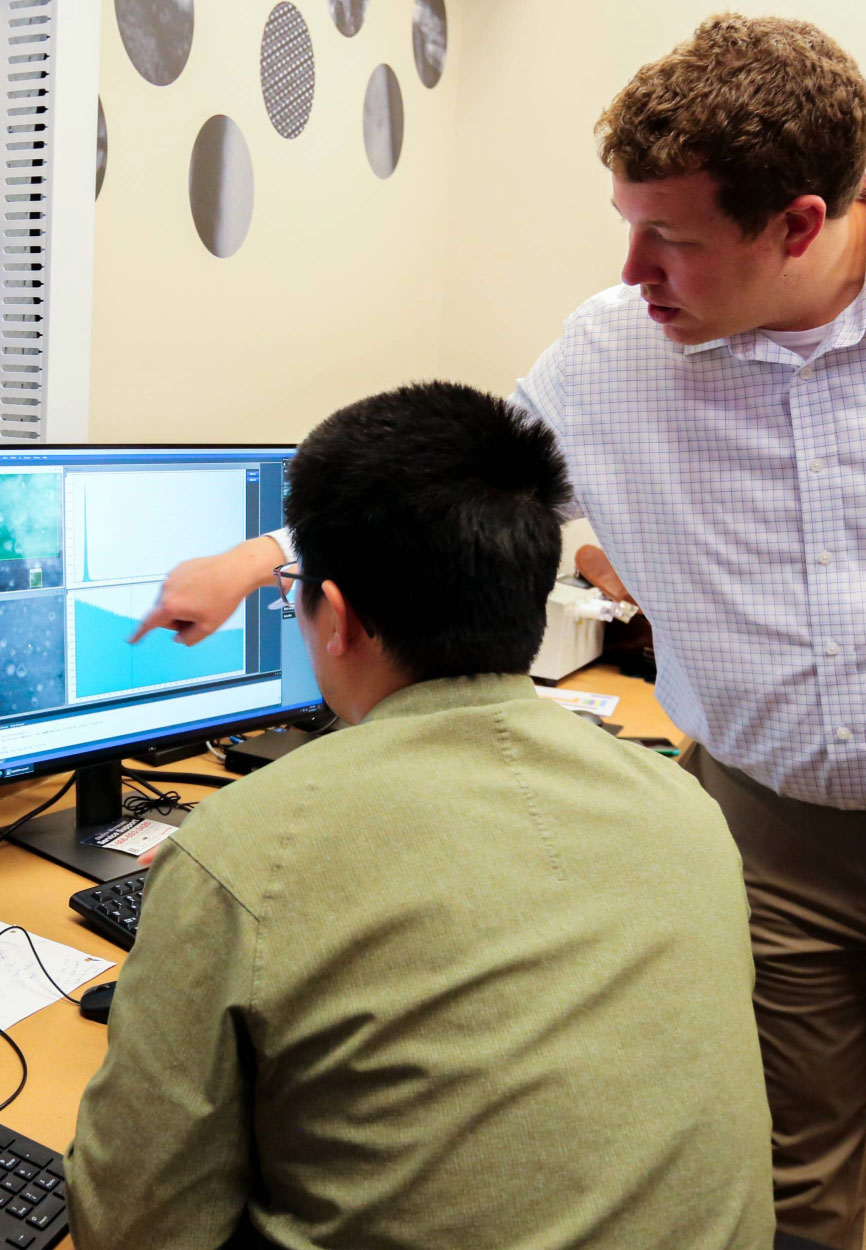
Chris Marvel, right, collaborates with Ching-Heng Shiau, an LSU scanning transmission electron microscopy specialist while working with the new double-corrected Spectra 300 Scanning Transmission Electron Microscope (S/TEM).
Marvel said EPIC Lab team members are “super users” of the electron microscopes in the newly minted Advanced Microscopy and Analytical Core facility, which recently added a new double-corrected Spectra 300 Scanning Transmission Electron Microscope (S/TEM) touted as Louisiana’s most advanced microscope.
He said access to these instruments allows students to learn critical skills they can use throughout their careers.
“More universities and labs are acquiring these instruments, but there are not many universities that can train students as new instruments are installed,” he said. “LSU is one of the few places that can prepare students to do this state-of-the-art research.”
Marvel said team members use the S/TEM to observe how atoms are arranged in test materials by recording atomic-resolution images, allowing them to measure composition and chemistry on the atomic scale.
Other Areas of Interest
Transparent but Incredibly Strong Ceramics
The Marvel EPIC Lab is also addressing the need for transparent materials that are strong enough for use as windows in extreme environments, such as those found on the nose cones of long-range hypersonic missiles, aircraft, or spacecraft.
At such high speeds, surfaces of vehicles—whether metal, ceramic, or composite—can heat to thousands of degrees, creating major challenges for materials, including melting, cracking, or weakening.
“Our research on oxide ceramics is evaluating how we can make transparent materials that are stronger than conventional glass,” Marvel said. “We aim to tailor the microstructure to get the best properties for the intended applications.”
Mia said the work on transparent, lightweight, and mechanically strong ceramics shows great promise for multiple other high-performance applications, including bulletproof windows or body armor.
“Our research lays the groundwork for further developing the next generation materials that can be used further for space, aerospace, and other industries,” he said.
Polymers and Composites
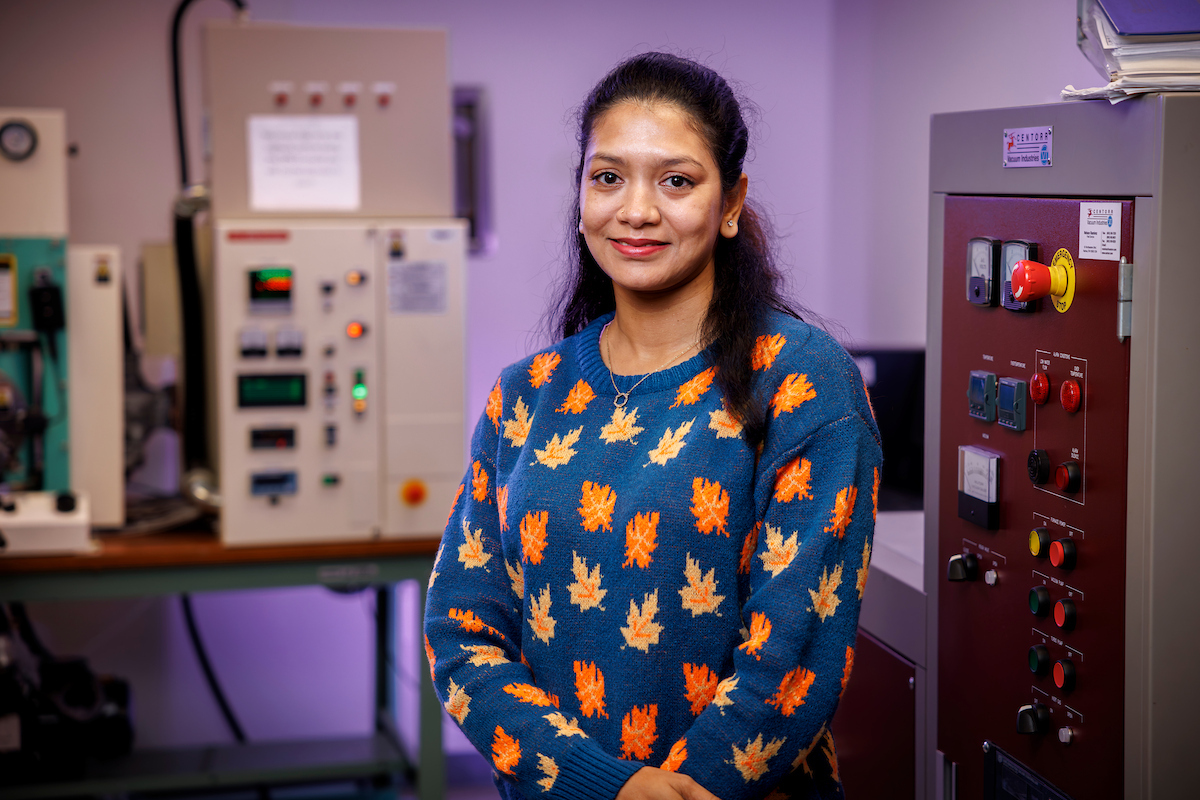
Fahima Shaon
Similarly, research by Fahima Shaon, a postdoctoral researcher in mechanical engineering, is extending the Marvel EPIC Lab’s work in metals and ceramics into the world of polymers and composites—materials increasingly used in lightweight vehicles, energy systems, and semiconductor manufacturing.
Shaon, whose expertise encompasses the formation, hardening, and behavior of plastics and adhesives under various conditions, said she became fascinated during her PhD research with the materials’ microscopic structure and behavior.
“I found Dr. Marvel's lab is perfectly aligned with my interest to extend that into an application to some material designing,” she said.
One goal of her work is to develop polygenic materials that are more sustainable and environmentally safe, with enhanced mechanical strength, making them suitable for industry applications as well.
The Undergraduate Research Experience
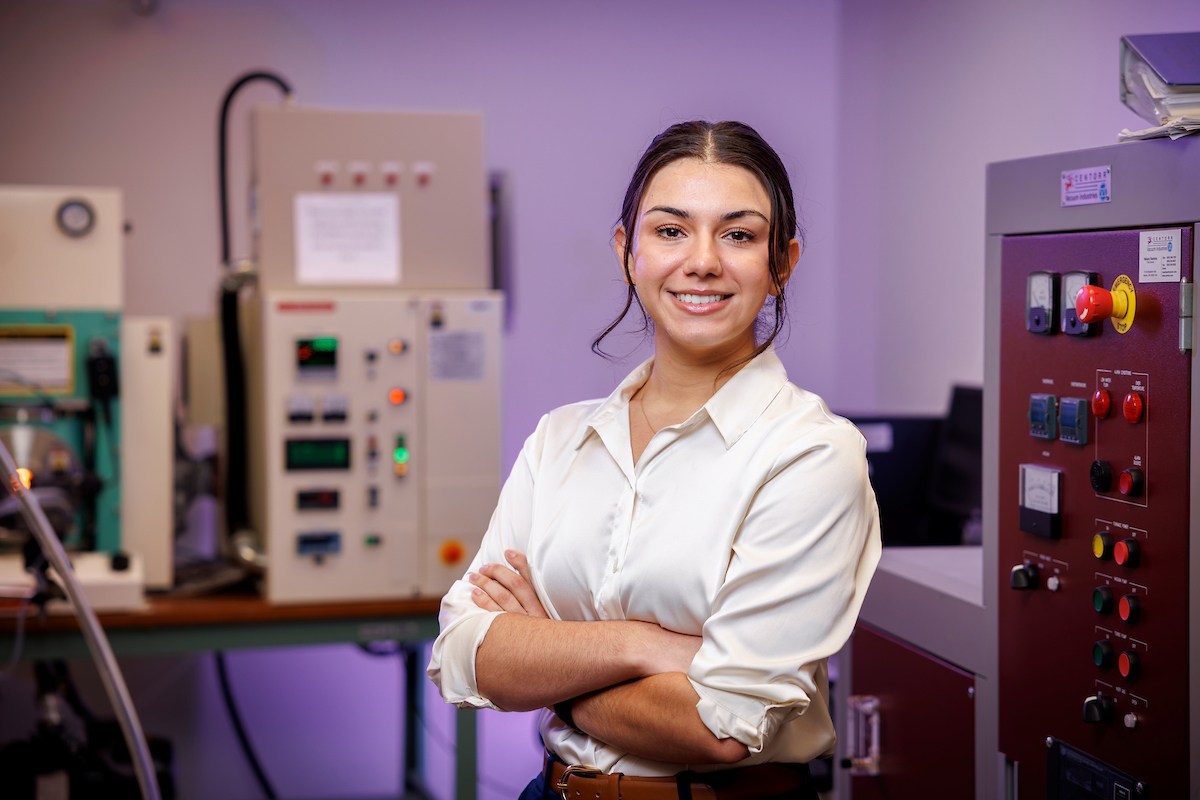
Samantha Murillo
Samantha Murillo conducts thermal spray research, fabricating and testing coatings on piping, tubing, or flat plates for extended durability.
As part of a senior capstone project, Murillo, a graduating senior studying mechanical engineering with a minor in material science, is working to improve the machinery that applies the coating for better cost-effectiveness and efficiency.
“For chemical refineries and plants that have to deal with anything corrosive, these kinds of coatings are going to be huge for just improving the lifespan of those parts and improving their functionality overall,” she said.
Following graduation, Murillo said she would like to work in an industrial sector, specifically in research and development types of roles. She said her experience in the Marvel EPIC Lab certainly played a role in shaping her career goals, while also building her confidence and skills.
“I definitely feel like once I started working in the lab, it really changed the trajectory of things in my academic career,” she said. “I got to work on a lot more projects, hands-on, which is great. It sparked my curiosity for a lot more things.
“I've gotten so much mentorship and guidance from all of the postdocs and grad students. It's a very supportive environment.”
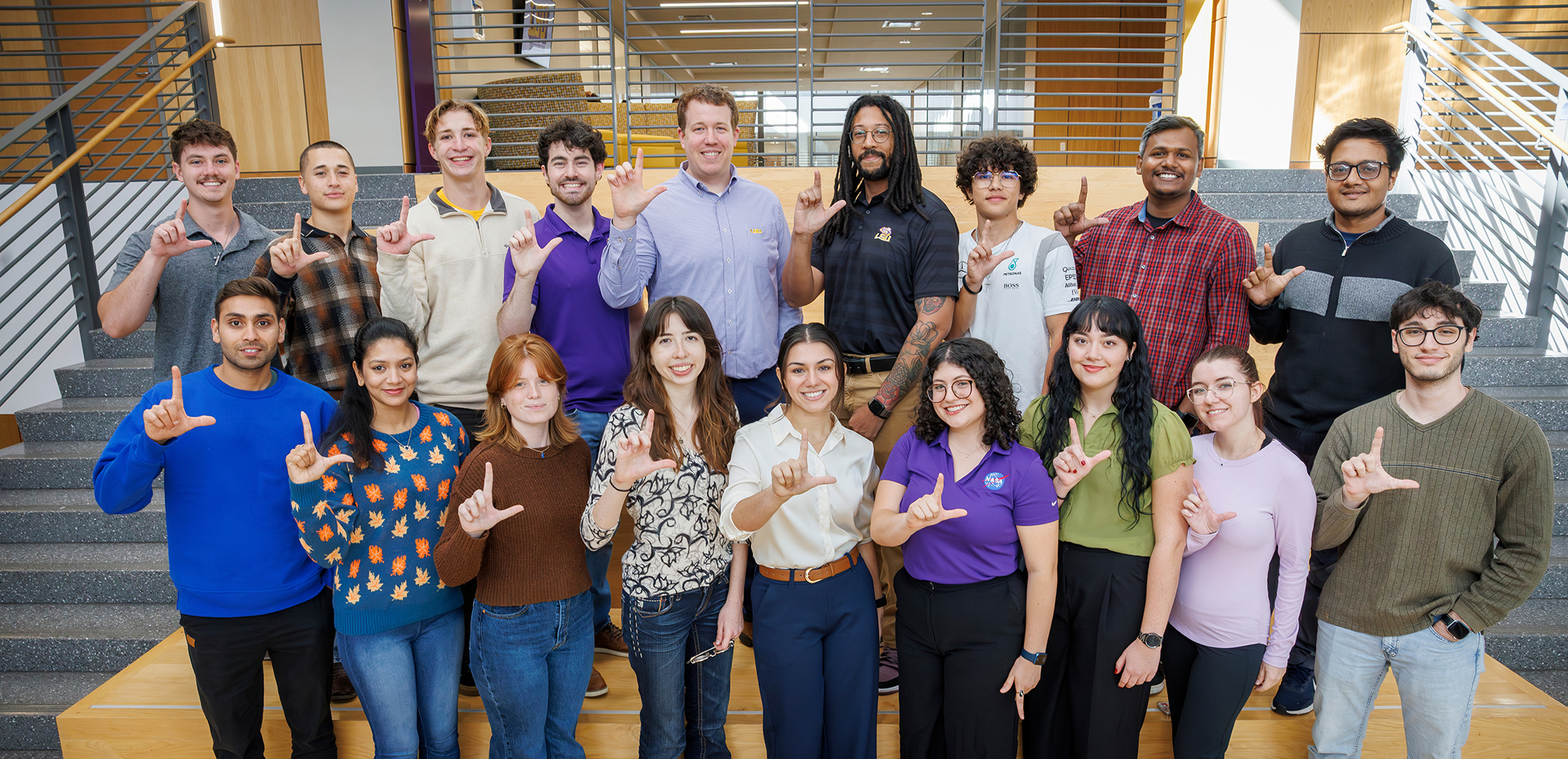
Group photo of LSU’s Extreme Processing & Interfacial Complexions (EPIC) Lab research team.
Next Steps
Let LSU put you on a path to success! With 330+ undergraduate programs, 70 master's programs, and over 50 doctoral programs, we have a degree for you.