
Protecting pets from snake bites
August 31, 2026
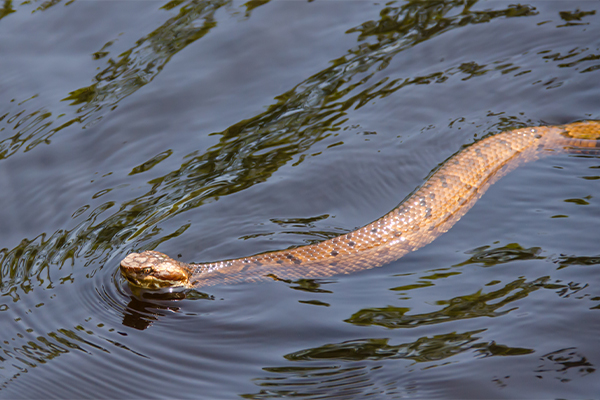
Cottonmouth
– Photo provided by Adobe Stock
LSU Vet Med has seen an increase in the number of snakebite cases this summer. Louisiana has several medically important venomous snakes, and most snakebite first aid is about getting the animal to veterinary care quickly rather than attempting treatment at home.
Protecting pets from snakebites
- Keep dogs on a leash when walking in wooded areas, near waterways, on trails or in areas with tall grass or heavy vegetation.
- Stay on cleared paths and trails. Don’t allow pets to investigate holes, brush piles, fallen logs, dense vegetation or areas beneath buildings.
- Keep your yard maintained. Mow tall grass, trim overgrown vegetation and remove piles of lumber, leaves, debris and other places where snakes may shelter.
- Reduce rodents around your home. Rodents can attract snakes. Keep pet food, birdseed and garbage securely stored, and address areas where rodents may live.
- Be especially cautious around water. Cottonmouths and several harmless watersnake species occur around Louisiana's ponds, lakes, bayous and wetlands.
- Use extra caution when visibility is poor. Carry a flashlight when walking pets outside at night.
- Do not approach or attempt to kill a snake. Moving toward a snake increases the opportunity for a bite. Most Louisiana snakes are nonvenomous and play an important ecological role.
- Don't rely on appearance alone to decide whether a snake is venomous. Harmless Louisiana snakes are frequently mistaken for venomous species. If you can safely take a photograph from a distance, it may help with identification but never delay veterinary care or put yourself at risk trying to identify or capture the snake.
Signs that your dog or cat may have been bitten
Signs vary depending on the species of snake, location of the bite, amount of venom delivered and size and health of the animal. Watch for:
- Sudden pain, crying out or signs of distress
- Rapid swelling, particularly of the face, muzzle or limbs
- One or more puncture wounds, although fang marks may be difficult to find
- Bleeding, bruising or discoloration around the bite
- Weakness, lethargy or collapse
- Drooling
- Vomiting
- Rapid or difficult breathing
- Pale gums
- Tremors, weakness, difficulty walking or other neurologic signs
- In severe cases, shock, respiratory problems, abnormal bleeding or other systemic effects
Important: A lack of obvious fang marks or immediate swelling does not rule out a venomous snakebite. Coral snake envenomation can produce neurologic effects rather than the dramatic swelling associated with many pit viper bites.
What to do if your pet is bitten
Treat a suspected venomous snakebite as an emergency. Call your veterinarian or the nearest veterinary emergency hospital immediately.
- Keep your pet as calm and still as possible. Activity can increase circulation and potentially speed the distribution of venom.
- If possible, carry your pet rather than allowing it to walk, particularly if the bite is on a leg.
- If the bite is on the face or neck, remove the collar or other restrictive items because swelling can develop rapidly.
- Do not apply ice or heat.
- Do not apply a tourniquet or compression bandage unless specifically instructed by a veterinarian.
- Do not cut the bite or attempt to suck out the venom.
- Do not give medications, including human pain relievers or antihistamines, unless instructed by a veterinarian.
- Do not attempt to catch or kill the snake. Venom remains active even in a dead snake and coming in contact with the fangs can still be a hazard.
- If it can be done without approaching the snake, take a photograph from a safe distance for possible identification. A zoomed picture of the face and eyes can help improve identification.
- Go directly to veterinary care. Treatment may include pain management, IV fluids, monitoring and supportive care; depending on the type and severity of envenomation, antivenom may be indicated.
Venomous snakes in Louisiana
The Louisiana Department of Wildlife and Fisheries' current snake guide identifies six venomous snake groups/species in Louisiana:
- eastern copperhead
- northern cottonmouth
- pygmy rattlesnake
- timber rattlesnake
- eastern diamond-backed rattlesnake
- coral snakes (harlequin/eastern and Texas coral snakes).
Copperhead: Widespread in wooded habitats and one of the species Louisiana pet owners are likely to encounter. Its camouflage can make it particularly difficult to see among leaves and forest debris.
Cottonmouth, also commonly called a water moccasin: Strongly associated with wetlands and aquatic environments, making it especially relevant in Louisiana. One communications point worth emphasizing is that not every snake seen swimming or near water is a cottonmouth; Louisiana has several harmless watersnakes that are frequently misidentified.
Timber rattlesnake, sometimes called a canebrake rattlesnake: Occurs in wooded habitats in Louisiana.
Pygmy rattlesnake: A small rattlesnake found in portions of Louisiana. Its small size and relatively subtle rattle can make it easy to overlook.
Eastern diamondback rattlesnake: Occurs in Louisiana but has a more limited distribution and is much less likely to be encountered than some of the other venomous species.
Coral snakes: Louisiana has eastern/harlequin and Texas coral snake populations. LDWF identifies the harlequin coral snake primarily with the Florida Parishes in southeastern Louisiana, while the Texas form occurs west of the Mississippi River. Coral snakes generally inhabit forested areas and can shelter beneath leaf litter and other organic material.
In case of emergency
Your veterinarian should be your first call in case of a pet or animal medical emergency. Before an emergency occurs, it is a good idea to ask your veterinarian what to do if their office or clinic is closed and your pet needs emergency care. Having this information on hand can help your pet get the needed care quickly. In the Baton Rouge area, LSU Vet Med is open for emergencies 24/7, 365 days a year. Please call us in advance if possible so that we can be better prepared for your arrival.
Pets and small exotics: 225-578-9600
Horses and farm animals: 225-578-9500
About LSU Vet Med: Bettering lives through education, public service, and discovery
The LSU School of Veterinary Medicine is one of only 33 veterinary schools in the U.S. and the only one in Louisiana. LSU Vet Med is dedicated to improving and protecting the lives of animals and people through superior education, transformational research, and compassionate care. We teach. We heal. We discover. We protect.